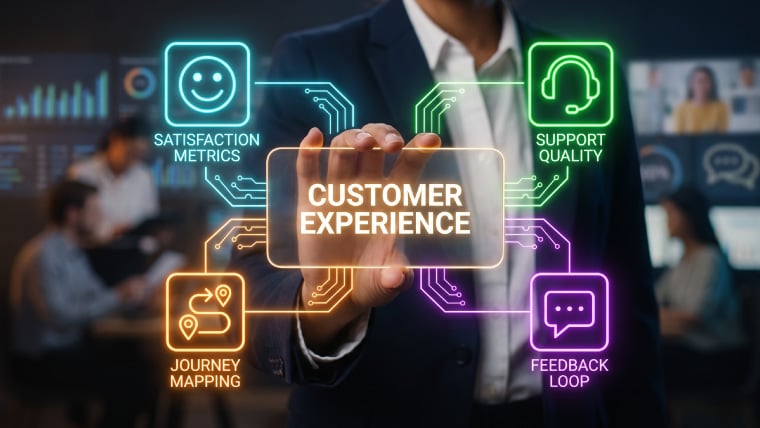
Prepare yourself, as the customer experience (CX) field is about to undergo an exciting transformation! Between 2026 and 2027, businesses will transition from merely dabbling in artificial intelligence (AI) to fully embracing AI-powered operations. This remarkable shift is fueled by an exciting mix of automation, real-time intelligence, human-centered design, and a strong emphasis on accountability.
By 2027, the companies leading the CX revolution won’t just be running AI pilot programs; they’ll be operating seamlessly with AI at their core. But wait—there’s a twist! To truly thrive, these organizations will need to ensure that their best employees are part of this journey.
Let’s dive into the ten strategic imperatives that will help CX leaders carve out their competitive edge over the next couple of years.
AI Voice Agents Surge as the IVR Era Fades
Imagine chatting with an AI that feels almost human. Voice AI is quickly becoming the hot topic in customer experience, with response speed at a level that makes AI conversations almost indistinguishable from those with human agents. This means AI can handle everything from authentication to claims with ease, smoothly handing off to a human whenever necessary.
Strategic Focus:
- Aim for lightning-fast <800ms response times.
- Build a session memory that flows across different channels.
- Gradually transition away from IVR while continuously testing new methods.
Decision Intelligence Becomes the New Organizational Superpower
Analytics will evolve from a passive role to a dynamic force within organizations. By 2026, expect decision intelligence to be embedded across CX, marketing, and operations, offering real-time insights to proactively tackle churn risks and identify revenue opportunities.
Strategic Focus:
- Create a cross-functional “Decision Desk” for unified insights.
- Rethink customer journeys from start to finish.
- Establish feedback loops that keep the learning process alive.
Experience Orchestration Becomes the Backbone of CX
It’s no longer sufficient to just be omnichannel; it’s time for orchestration. This involves harmonizing marketing, sales, and service to create seamless and proactive journeys. By focusing on identity resolution and policy-aware routing, companies can significantly reduce customer drop-offs and boost conversions.
Strategic Focus:
- Identify and map out the top five customer journeys.
- Centralize approval processes and rules.
- Use safe testing environments to trial AI-driven workflows.
Humanizing AI Becomes a Design Principle
In a world chasing efficiency, empathy must rise to the forefront. AI must not only be smart but also transparent, relatable, and able to provide clear explanations. When AI assistant “copilots” can communicate with understanding, it builds trust and enhances customer satisfaction.
Strategic Focus:
- Measure empathy levels and sentiment during AI interactions.
- Incorporate explainer widgets where explanations are crucial.
- Address potential biases, tone, and accessibility concerns.
Employee Experience (EX) Returns to Center Stage
As AI takes over routine tasks, the spotlight shifts back to human agents who handle more complex and emotional interactions. Empowered employees significantly enhance the customer experience – organizations that leverage multiple solutions report 64% higher employee engagement.
Strategic Focus:
- Redesign roles to emphasize AI collaboration.
- Ensure agents are trained and certified in using AI tools.
- Invest in employee well-being, especially in high-stress situations.
CX Tightens Its Connection to Business Outcomes
2026 signals a pivotal shift towards ROI-driven CX. Success metrics will expand beyond mere survey scores to include retention, revenue, and overall service costs, with every aspect of the CX roadmap resembling an investment portfolio.
Strategic Focus:
- Standardize templates for business cases.
- Publish a quarterly report on CX profit and loss.
- Align incentives with customer journey outcomes.
Trust and Governance Become Non-Negotiable
As AI continues to grow, customers crave transparency. They want to know when they’re chatting with an AI and how their data is being used. Establishing strong governance and consent management practices will be crucial.
Strategic Focus:
- Develop an AI risk register to identify and mitigate concerns.
- Implement controls for bias, privacy, and safety.
- Clearly label AI interactions and conduct ongoing validation.
Machine Customers Emerge as a New CX Segment
The future isn’t just about people; enter the age of machine customers. AI agents and autonomous systems will take a seat at the table, handling tasks like placing orders and booking services, leading to new strategies and opportunities.
Strategic Focus:
- Create experiences with an API-first approach.
- Define parameters for interactions, including quotas and liabilities.
- Implement observability tools and emergency protocols.
Unstructured Data Becomes the Core AI Advantage
Did you know that a staggering 70–90% of enterprise data is unstructured? This treasure trove lies in conversations, images, and videos, which hold the key to meaningful customer insights. By 2026, harnessing this unstructured data will give companies a significant edge.
Strategic Focus:
- Invest in data fabrics to integrate diverse data types.
- Harness advanced analytics to extract actionable insights from unstructured data.
In Conclusion
As we look ahead to 2026–2027, it’s clear the customer experience landscape is poised for remarkable change. By embracing these strategic imperatives, organizations can ensure they are not just keeping pace but leading the charge toward a promising future of innovation and enhanced customer satisfaction. Are you ready to join the revolution?
Alpa Shah, Global Vice President at Frost & Sullivan, has vast professional and volunteer experience in developing business and organization strategies; analyzing product, regional, and vertical markets; planning and executing events; sales and marketing; writing growth opportunity insights; and, most importantly, creating and inspiring teams to be best in class. Her current area of focus is on CX; she has also worked on projects covering technologies such as UC and mobile and wireless.